
How to combine colors in clothing: a practical guide to stylish pairings
Combining colors is one of the easiest ways to change how an outfit looks. Your wardrobe doesn't need to be full of colors to create interesting and varied combinations. On the contrary, a well-chosen color foundation makes styling much easier.
The key is to build a wardrobe of colors that naturally complement each other, and then add a few accent shades that reflect your personal style.
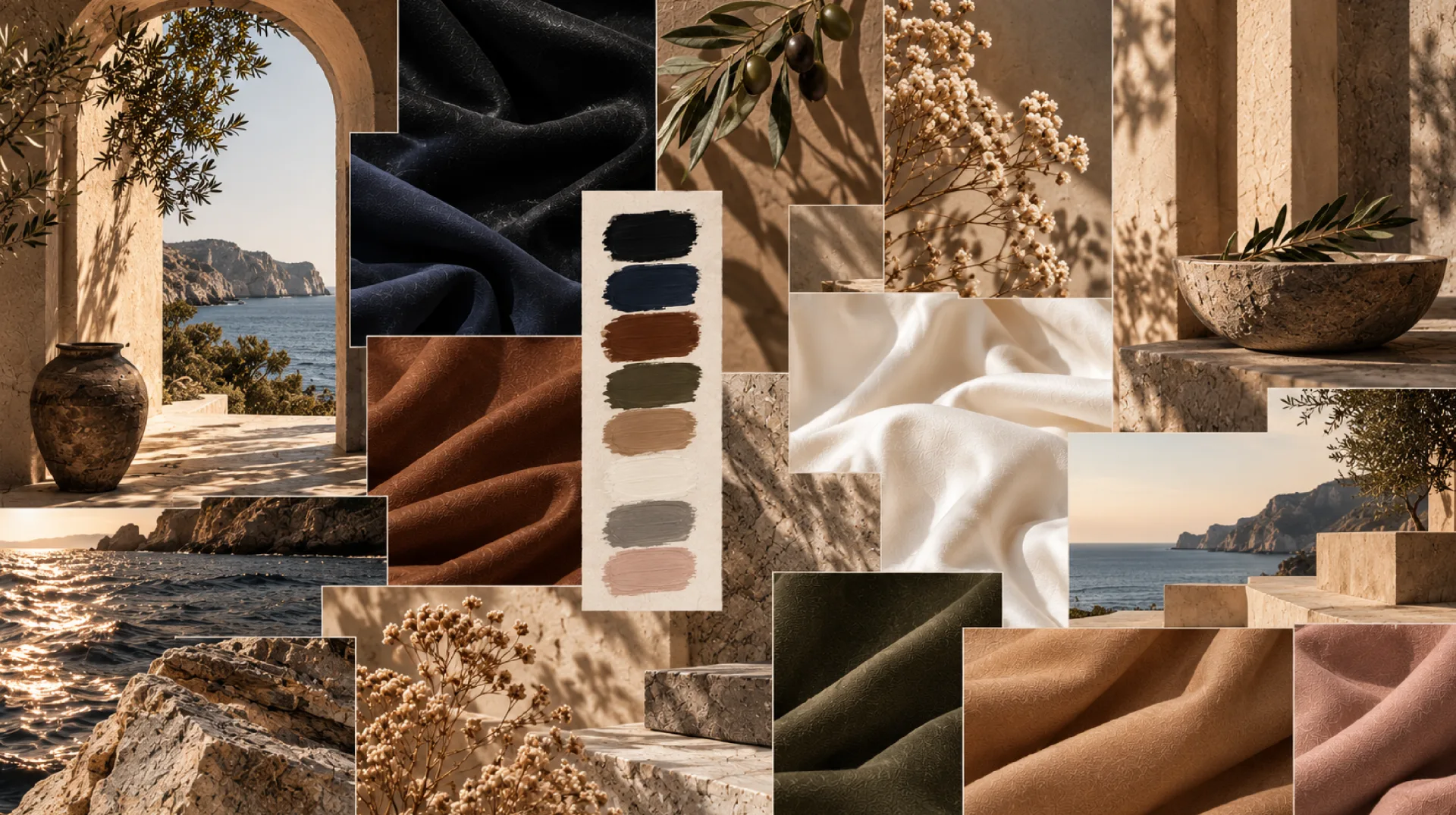
Neutral colors: the foundation of a well-built wardrobe
The eight basic colors that are easiest to combine with one another are:
black, navy, brown, khaki, beige, white, gray, and nude.
These colors are the foundation of a well-composed wardrobe because they allow for a large number of combinations without the risk of an overly complicated color scheme.
This is why a well-balanced capsule wardrobe can follow the 80/20 rule: about 80% of your clothes in basic colors, with the remaining 20% bringing accents through brighter shades, prints, or interesting accessories.
You don't need to have all eight neutral colors. It's more than enough to choose four or five that you like and that naturally fit your lifestyle. You can then build on them with a few accent colors.
For example, the combination of navy, white, beige, and brown can be the basis of an incredibly versatile wardrobe. If you prefer a more monochrome, minimalist aesthetic, you could choose black, gray, white, and nude.
The three main approaches to combining colors
Once you know which colors form the foundation of your wardrobe, you can build your outfits in three main ways: tonal, contrasting, or the so-called "sandwich" approach.
1. Tonal dressing: one color, different shades
Tonal dressing uses one color or different shades within the same color family.
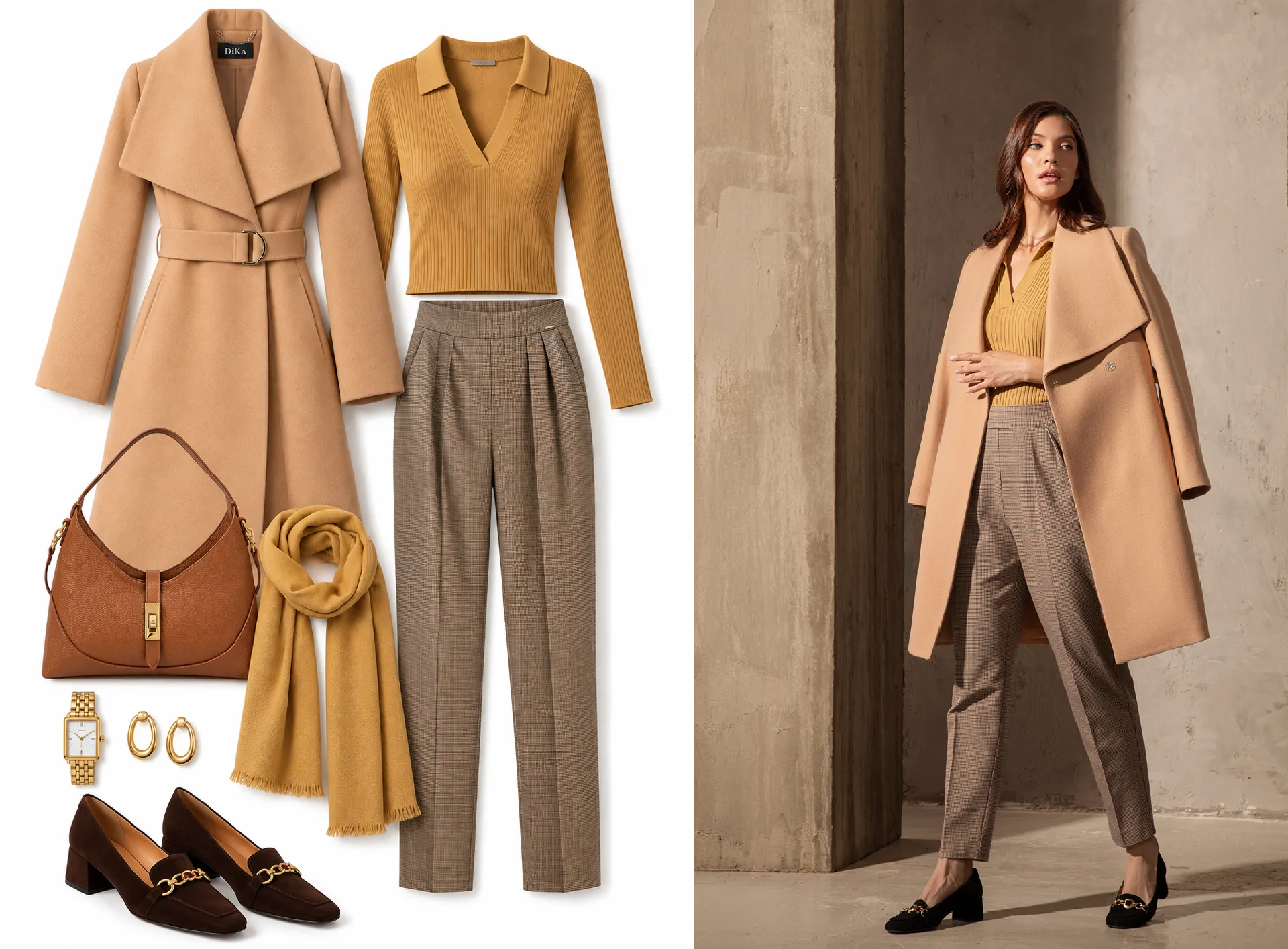
For example, you could combine light beige, camel, and caramel, different shades of brown, or several tones of gray.
This is one of the easiest ways to create an elegant, premium, and timeless combination. The single-color vertical line also has an added visual effect: it can make the silhouette appear more elongated and cohesive.
To avoid the outfit looking monotonous, use different textures. For example, wool trousers in camel can be paired with a cashmere sweater in a lighter shade and leather shoes in a cognac tone.
Styling idea: Camel trousers + ecru sweater + coat in a warm beige shade + cognac shoes.
2. Contrasting combinations: when colors create an accent
Contrasting dressing uses two colors that stand out clearly from one another and create a stronger visual composition.
Among the most familiar combinations are:
- blue + red
- green + orange
- pink + gray
- brown + light blue
- green + purple
- blue + orange
- purple + yellow
- burgundy + pink
- navy + mustard yellow
- brown + sky blue
Contrast doesn't necessarily mean bright colors. You can achieve the same effect with more muted, refined shades.
For example, instead of vivid orange and bright blue, try chocolate brown and light blue. Instead of bright pink and black, you could choose powder pink and charcoal gray.
A good way to start is to let one color be dominant while the other appears as an accent.
Styling idea: Navy suit + light blue shirt + burgundy shoes.
Or:
Brown trousers + light blue shirt + brown belt and shoes.
3. The "Sandwich" type: repeat one color
This is one of the most practical tricks for creating a harmonious outfit.
With the "sandwich" approach, you repeat the same color in two or three places in the outfit. This way, the eye naturally connects the individual elements and the composition looks complete.
For example:
gray suit + pink shirt + pink shoes
or:
beige trousers + white shirt + beige shoes and bag.
The repetition doesn't need to be the exact same shade. You can use different tones within the same color family, as long as the visual connection is clear.
This approach works especially well with accessories. One color can be repeated in the shoes and bag, in the belt and shoes, or in the top and a small accessory.
How to combine neutral colors
Neutral colors are valuable precisely because they can be combined both with each other and with almost any accent color.
Black
Black is a classic wardrobe foundation and allows for both minimalist and contrasting combinations.
Combine it with: white, gray, beige, nude, camel, burgundy, dark green, or powder pink.
Navy
Navy is a wonderful alternative to black, especially when you're looking for a softer, more elegant combination.
It looks especially good with: white, beige, brown, camel, light blue, and burgundy.
Brown
Brown combines naturally with other warm neutrals, but is also interesting in contrast with cooler tones.
Try: beige, ecru, camel, khaki, light blue, powder pink, or burgundy.
Beige and Nude
These colors create a soft, calm base and are especially suited to tonal combinations.
Combine them with: white, camel, brown, caramel, black, or a brighter accent color.
Gray
Gray is one of the most versatile neutral colors. It can serve as the basis of a minimalist look or balance out a richer color.
Particularly good combinations include: gray + pink, gray + burgundy, gray + blue, gray + green, and gray + purple.
Khaki
Khaki can be used as a neutral color, but it has enough character to add interest to an outfit.
Combine it with: beige, brown, ecru, white, navy, or burgundy.
How many colors should you use in one outfit?
There's no universal rule dictating a specific number of colors. Still, if you want an outfit to look harmonious and easy to style, a good starting point is to work with two or three colors.
For example:
Beige + white + brown
or:
Navy + light blue + burgundy
or:
Gray + pink + black
If you're using a bold print, you can pick one of the colors in it and repeat it elsewhere in the outfit. This way, the print becomes a natural part of the composition rather than looking like a separate accent.
How to use accent colors
An accent color doesn't need to cover a large area. Sometimes it's the small pop of color that makes an outfit memorable.
If your base is neutral, you can add an accent through:
For example, black trousers + beige blazer + burgundy shoes is enough to add color without completely changing the neutral base.
The easiest formula for well-combined colors
If you're unsure how to start, use the following formula:
1 main color + 1 neutral color + 1 accent.
For example:
Brown + ecru + burgundy
Navy + white + red
Gray + black + pink
Beige + brown + light blue
This gives enough freedom for individuality while still creating a clear visual structure.
What matters most: the color should work for your style
Well-combined colors don't necessarily mean a bright or complicated outfit. Sometimes the most elegant combinations are built almost entirely from neutral tones, with just one small accent enough to add character.
Start with the colors already present in your wardrobe. Choose four or five basic shades that you can easily combine with one another, and add a few accent colors that reflect your personal style.
When colors are well chosen, styling becomes much easier. And a well-put-together wardrobe isn't the one with the most colors - it's the one where every color has its place.